Episode 001: William Ong
Awesome. Well, welcome everybody to, this is gonna be inaugural episode of Text Unplugs in Rock and Roll, and I'm super stoked to have a guest on today, William Ong. So, William, first of all, why don't you tell everybody how we know each other and a little bit about your technical background? Because that's the beginning. Right?
Adam Pippert:We start off with the technical part, and then we move into the music stuff later. So cool.
William Ong:Yeah. Sure. Definitely. So so, yeah, we actually met on Twitter. So, so recently, like, 2 months ago, I was working at a stealth startup and, we had this thing where they were like, oh, we need to boost our Twitter and get it running.
William Ong:So I had previously run TikTok accounts. So I just ported over the algorithm I was using for, TikTok and tried to re revamp it for Twitter. And we were testing that. And as we were testing the new algorithm for tick for Twitter to boost, that Adam along the way. So so, yeah, I reached out and, yeah, I I'm also a musician, but I also like doing developer work.
William Ong:So definitely cool stuff. I guess a little bit about my technical background. I'm kind of all over the place, so I actually did music stuff before I detect stuff. So so what I did originally was I was a salesman, and I was a sales guy. And I would would do door to door knocking with houses.
William Ong:We sold, like, just a bunch of random things with the family. And one of those things we ended up doing was with our TikTok, we started doing music and doing all that stuff to, make our sales pitches more, more beautiful, I guess, and make things sound slightly better. And as we were doing that, I got more into music, learned saxophone, learned piano, and all that. And eventually, I got to the point where I was playing with my saxophone and guitar pedals. And so but, yeah, once we did guitar pedals, then that circuit, that's DSP, that's electronics.
William Ong:I got really interested in that, ended up becoming electrical engineer. And from there, it was, it was a really weird transition because I've never really done STEM in my life. And then I went into electrical engineering, out of the blue nowhere, somehow magically did okay. And while I was in engineering, I did data science. And through data science, I have I got a few internships, at at a few various companies, and I built out this data science portfolio.
William Ong:Eventually, built out my data science portfolio, started doing data science projects, even one of you hackathons in these companies. And, and that brought me to, well, hey, I can build an award winning AI. How do I go production analyze it? How do I make it actually a product? And that's the journey I'm on now where it's like, okay, let me learn the front end.
William Ong:Let me learn React. Let me get really good at, all these web frameworks and all that so I can actually take what I already know works and then make it a product for people to use. So it's been a interesting journey.
Adam Pippert:Very cool. Sounds like you answered every single one of my questions in the last 3 minutes. So that's it. That's the pod.
William Ong:Cool. Rocket.
Adam Pippert:So so yeah. So, let's see. I'm try I'm trying to mentally figure out what you just told me. So you actually started off door to door sales, moved into electrical engineering. Interesting.
Adam Pippert:And then eventually moved into data science and went that circuitous route into doing development. So would you could would you consider yourself a software developer or a data scientist now?
William Ong:Now, probably more software developer because now, most of the days I'm in YAML files, I'm doing, I'm doing mainly front end stuff. I have, like, my I now ported over a lot of my Python to Node JS. So it's straight up just it it's more developer work now. And now with data science, like, everything's on hugging face. You have like, I can build an amazing model.
William Ong:Someone else got an open source one that I don't have to pay for. It works 80%. Let me just fine tune it for, like, 5 minutes and then Right.
Adam Pippert:Exactly. Exactly. And I'm doing some work with models myself, a little bit at Red Hat, but it's more of it's more of we do the underlying platform that hosts all, like, the model serving and, iterative testing and stuff. We do some work for IBM because IBM owns our owns my company now. So I'm in fact, I've just been doing some work today with a customer about do doing some stuff with Ansible and connecting it in with, with Watson X.
Adam Pippert:So that's gonna be super fun stuff that I get to work on. But for you, how do you how do you see your tech expertise intersect with your passion for music? Are there specific technologies that you've developed along the way that you said, oh, maybe I can use this for a music project? Like, tell me a little bit about that.
William Ong:Yes. So my, my AI experience and my develop development experience mainly focused on computer vision systems. So as I was building these computer vision algorithms and all that, eventually, there was this one hackathon where I did it when I was at Procter and Gamble. There was a hackathon where they were basically saying, I can't go into crazy detail because I signed, like, 15 Sure.
Adam Pippert:Yeah. Yeah. Of
William Ong:course. Basically, it was a audio classification project, and you have to classify this specific sound for a research project. And then you have to see, hey, is this sound, water running or is this sound water not running? Something like that. And so I ended up building an algorithm that used, MELD spectrograms, which is something I learned in DSP and in music.
William Ong:So Mhmm. When I do my research with music and, like, trying to understand music trends, I often go into the Fourier series, Fourier transform to get visualizations. Because I'm trying to trend line, like pop songs. So I need some form of metric for for a computer to understand. So MEL spectrogram.
William Ong:And that spectrogram combined with the image classification algorithm like VGG 19, end up hitting 98% f one score. So like, it ended up scoring like near human levels of accuracy when we That's awesome. We fine tuned it. And so Yeah. Yeah.
William Ong:Yeah. Yeah.
Adam Pippert:That's fascinating. I know when I I did a project, this is maybe, like, 2 years ago, doing a predictive algorithm for, MLOps. So, essentially, like, being able to determine if some sort of value that you got over the course of a time series was an anomaly or not, so, like, an anomaly detection algorithm. And it turned out that Fourier series actually worked really well for that too. And it was something I wasn't expecting at all.
Adam Pippert:We used a little bit of Facebook's profit model at that time, but we also did some Fourier analysis. And and that really helps you determine, like, whether or not the thing that you're looking at is within the realm of normal or not. And and that was really fun, to get to go. Oh, yeah. I remember for you, sir.
Adam Pippert:I remember that from math class, and I remember that from from sound analysis. Right? So it's it's interesting how those things overlap a little bit. Would you say that there are any, any projects that you did in your past that in the electrical engineering space that you would like to see move into more of a, I guess, digital realm? Or do you think that you find doing the the DSP stuff sort of as hardware as a separate, as a separate passion really is, the way to go?
William Ong:Well, what I actually see is it going backwards, going the other direction. So I've seen that I think a lot of digital things that we're doing should be coming along because so, like, for example, like, there's, with the 40 a series and 40 a transfer and all that, those can all be modeled with analog circuits at Mhmm. This infinitely high resolution. Like, quantum computers are basically gonna be run mostly from what I've seen so far on analog chips, analog ICs, and stuff like that. Stuff where where there's no 0, no one.
William Ong:It's like a continuous curve. So, like, I'm really starting to see that we're actually moving the other way. And in addition, like, I'm seeing this in multiple industries. So in music, you're seeing people using analog pedals instead of FPGAs. You're seeing, in film.
William Ong:So with cameras, I do photography for fun sometimes. We're going from digital back to film, and we're moving backwards trying to get more organic as as AI is, like, becoming this big giant behemoth. People are starting to feel, like, this need to to, like, get back to their roots. Like, my role in this digital art class was was was, like, was told to go to a forest. Yeah.
William Ong:I remember
Adam Pippert:I read an article. I wanna say it was in, like, March or April on Wired. That was all about how, they they were sort of the the zombie they called it, I think, the unbelievable zombie combat of analog computing. And it was all about how these analog chips, because they there's they're, using less power than a traditional digital because you have to constantly have power source against a digital circuit in order to be able to keep stuff in the memory, right, to be able to keep the latch. And so being able to have something be stored as, like, an analog value of some sort, and it can even be, like, flash memory or something.
Adam Pippert:But, having it stored in that, like, compute a sort of, like, computing memory storage means that you can save a lot on the the power requirements being able to keep all the all the data there. So it's really interesting that we're still we are starting to see that. I think some of it too is the fact that AI is so ubiquitous and people are just sort of looking to adopt it really quickly means that the only way to fight back against a computer is to do things that a computer can't do, or rather the only way to fight back against a discrete set of values taking work from you is to figure out problems that a discrete set of values can't solve.
William Ong:Yeah. Definitely. Yeah. Yeah. That's what I'm seeing.
William Ong:It's super interesting.
Adam Pippert:Yeah. It's getting fun out there for sure. Yeah. Yeah. I how about the other way around?
Adam Pippert:Like, can you can you share maybe a memorable or challenging experience where your technical skills ended up being crucial in something that you were working on musically?
William Ong:Yeah. So the here's one right now that I'm tackling currently, and it's been helpful. So I I did mainly data science for a while. And so from there, I'm doing a lot of trend analysis. I'm doing a lot of outlier analysis and all that.
William Ong:And I'm taking essentially just boatloads of manufacturing data to, like, come up with, hey, what does well in a manufacturing line? What works well like that? Like, so in process metrics and in process data, lots of time series, lots of just just influx DB, the the whole nine yard. And so from what I've been doing there now in music, my dad was like, hey, I wanna be a pop star. You were my data scientist in TikTok.
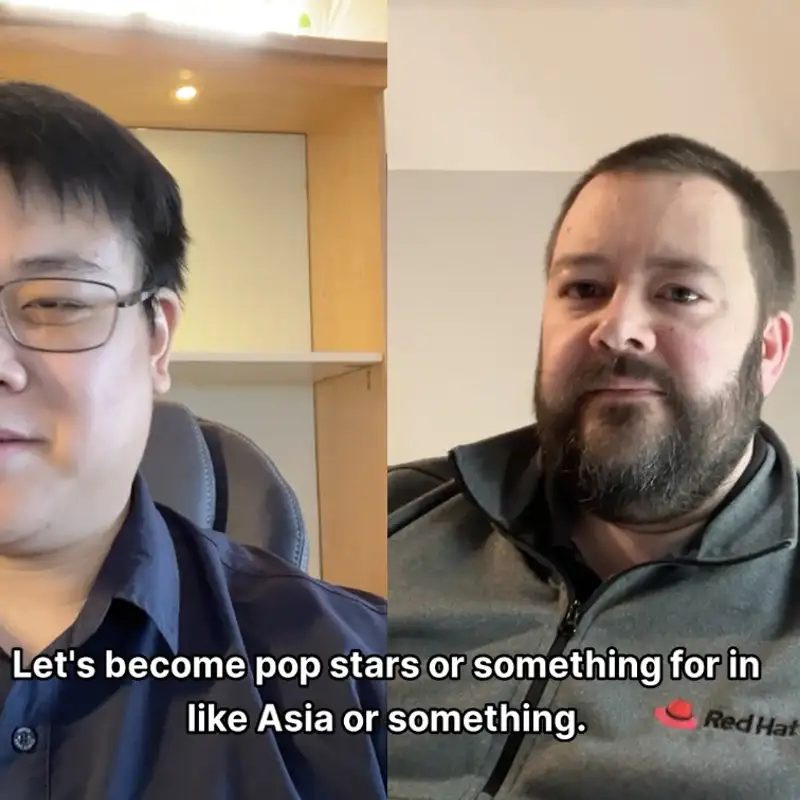
William Ong:Let's let's hammer through. Let's become pop stars or something for in, like, Asia or something. So now I'm basically just running, like, at this point, like, 10, 20 social media accounts. Yeah. All essentially, like, they're our manufacturing line.
William Ong:And I'm basically pulling telemetry data as I would from production lines. And I think what I know from manufacturing and reliability engineering to just be like, okay, if I understand this trend and I know what time this is this is happening, let me go plug it into GPT. Let me go plug it into wherever. Let me go generate music or a trend that I'm gonna post. So Fascinating.
Adam Pippert:That's cool.
William Ong:Yes. So
Adam Pippert:is your is your dad a data scientist too or no?
William Ong:So my dad's a sales guy. So I didn't
Adam Pippert:Okay.
William Ong:So my dad and I have worked together for, like, for, like, at this point, a decade and a half. I started when I was, like, 10 years old, knocking on doors with my dad.
Adam Pippert:Oh, cool. Okay.
William Ong:So, like, my dad's always done sales, always done the content side, and I was kind of his, like, analyst in the background just doing math and things that everyone else in the family is like, this is boring. Right. I'll go do Yeah.
Adam Pippert:Yeah. So, obviously, you've you've done, like, all this different stuff. Right? How on earth do you keep up with the latest developments in technology or in music or in really anything? Like, how do you what's your information diet look like, and how do you decide what to consume or not consume or what to test and not test?
William Ong:Yeah. So so I I figured this out in a very strange way is what I've been told. Because it's like, oh, you're a data scientist. Right? Just pull in ridiculous amounts of feeds of data and just just crunch and then summarization algorithm hit go.
William Ong:Boom. Do that. I actually do it in probably the most analog way imaginable. I go to parks. I go to museums.
William Ong:I go just walk around places and just listen. And then eventually, you just hear some keywords, and then you you pretty quickly understand what the trend is. Like, when I was at Trader Joe's, I hear people talk about Bitcoin. I'm like, you know what? Bitcoin's probably popular right now if Mhmm.
William Ong:The Trader Joe's and it's Bitcoin. So I just kinda keep my eyes open. And I'm on social media every day. So, like, usually, I'll be able to find the trends. But but the way I get novel ideas is by just existing and doing very non tech things.
Adam Pippert:Cool. Yeah. And I and you're significantly younger than me, so I'm assuming that you probably are more of a social media native than I am. Like, I actually took, I don't know, a a ton of time off of social media and tried to stay away from it as long as I could until I got, my most recent promotion. And then ironically enough, during my most recent promotion process, they're like, oh, yeah.
Adam Pippert:You don't have much of an online presence, do you? That's something I that's not an option anymore. Like, we have to be we have to be social beings whether we like it or not, especially in sales. Like, in that's one thing we have in common is both of us are now in the public eye trying to offer things for sale or offer, you know, technical expertise or whatever. And, we have to be public figures now.
Adam Pippert:So it's just kind of how it works. For me, I don't think I think my diet isn't really so much from figuring out trends on social media, but I do the analog thing too. Like, I love to go to, you know, just out to the park and just kinda be my myself for a while, but then when people walk by, kinda listen in on what that conversation's like or grocery stores. Like, I'd one thing that I've done recently, and I know this is gonna sound like the most insane thing ever, but I've actually been doing Instacarting, every once in a while. Like, if I need something at the grocery store rather than going and doing, like, going to the grocery store myself, I'll actually go and do an Instacart run to get the thing I want and then have somebody else pay for my grocery store trip.
Adam Pippert:But what it does is it forces me while they're, you know, cranking through 50 items or whatever in this Instacart run to talk to the cashier and find out, like, what sort of what's the pulse of the area, what kinds of things are going on. And I and I go shop sometimes in stores I wouldn't normally shop in or go expose myself to public areas I wouldn't normally go to. And so that way, getting to see what the way other people live in an environment, getting to see, and interact in stores I wouldn't normally go in, see what's on sale, like, it just hearing conversations I wouldn't normally hear, it gets me outside of my bubble, and then I'm starting to think about things a little more critically and a little more holistically. So yeah. So I I it's not something I'm doing, like, because I need the money as much as it is.
Adam Pippert:Just it's, it's just nice to have, you know, extra $50 or whatever in a day, but really it's more of the, like, kind of forcing myself out of my comfort zone and thinking about things differently and critically.
William Ong:So That's, like, really smart, actually. Yeah. How do you try that? Yeah.
Adam Pippert:Yeah. And and I've got, like, a little, you know, Subaru. The you know, just little little tiny runaround car. My wife gets a nice car. So I just you take the little Subaru and just go running around, and it's fun.
Adam Pippert:It's kinda fun.
William Ong:I have a Subaru also. Nice to meet from, like, 2016.
Adam Pippert:Yeah. Yeah. Mine's, 14. But yeah. I mean, those little cars, they they get around.
Adam Pippert:Right? And they're not terribly difficult to fix. There is the the problem with the engine that they occasionally will blow ahead gasket and it's super expensive to fix. But once you do that Yeah. Rock solid.
Adam Pippert:Rock solid.
William Ong:Yeah. My supply.
Adam Pippert:Yeah. Yeah. Yeah. So can you think of, like, as far as your musical go background goes, what what instruments do you play other than saxophone, or are there others, or is it just that's that's it?
William Ong:Yeah. So I have a I mainly play saxophone, but I started playing piano at, like, 85 at all Mhmm. At that time. And so what what I did there was, like, I just I just kinda my mom put me in lessons because she's like, oh, hey. This is, like so so I guess a bit of background here.
William Ong:My the reason why I play instruments is so that I can make my brain better, so I can code better. It's like, I don't it's like, I don't really play music to play music. I play music so that my connections between the hemispheres are better as well.
Adam Pippert:Interesting. So it's like a synaptic building tool, really Yeah. In a way. Okay. Cool.
Adam Pippert:Interesting. And yeah.
William Ong:Yeah. And Oh, go ahead. Sorry.
Adam Pippert:Oh, I was gonna ask, like, given that you you look at it more as a synaptics growth tool, do you tend to like music that's more analytical? Like, or do you listen to, like, progressive rock and free jazz and stuff that's sort of, like, out there and, out there just to build your brain faster, or do you enjoy genres that are a little more mainstream?
William Ong:Yeah. So I, so I'm a weird mix. So I have so it's kinda 80 20. Mostly, it's the the mainstream genres because we're trying to figure out how to get into this industry anyways. So I need to understand what the mainstream looks like.
William Ong:But I do pop up the occasional Japanese math rock, And they're, like, just these Nice.
Adam Pippert:Nice.
William Ong:Completely, like, let let's drop e and then and then have some fun and see what happens. And that that type of genre, I do like as well. And and I kind of, image I kinda really like seeing, like, how some of these artists, what they'll do is they'll do something called the Tartini tone. So they'll play a tone and then a tone of 5th above, and it sounds like, an octave below. So, like, you have, like, really terrible speakers, it'll still sound bassy because of, like, interest.
William Ong:So it's it's like yeah. I'm really interested in learning about the math behind it and learning about how people produce. So now I'm getting into the MPC and all that. But but, yeah, it's mostly mainstream, but I I just listen to whatever most of
Adam Pippert:the time. Yeah. I think, is it Leo p, the guy that plays for Too Many Zoos? I think he does the Tartini Tones where he'll he's got, like, a Barry Saxx, and, he'll just crank out the lowest note you've possibly ever heard of just to get people's attention. Are you are you familiar with do you know who I'm talking about?
Adam Pippert:Too many zoos? But they are it's a trump it's a sax player, a trumpet guy, and a guy that plays bass drum and a bunch of percussion, and they're a street band. So they will go, like, out to the subway system in New York City and just, like, play in the streets. And they have a song called car alarm where they actually went up on the roof of a building that has one of those, like, drive up, you know, like, parking garage on the roof. And they got a Toyota Tacoma truck and got all these guys in the back of the truck and then did a song around the car alarm.
Adam Pippert:So the bass drum guy was, like, bang his foot super hard on the bed of the truck and then make the alarm go off, and then they play along with it. And then in the middle of the song, the alarm goes off and they're like, oh, crap. And then they have to go and bang it again and then, like, finish the song. So they do, like, really creative Yeah. Work around the the street environment and this, like, urban environment and being out in public.
Adam Pippert:So that's that's kind of their shtick. They're basically, like, one of those little subway groups that goes around. But they're very, very famous now because of all these videos and because of all this interactivity. And Leo is a phenomenal sax player. He's just a beast.
Adam Pippert:He's in some other bands too like Lucky Chops and stuff. But, as far as street performers, he's probably one of the more popular ones.
William Ong:Oh, that's super cool. Yes.
Adam Pippert:Except for maybe the Unipiper who's local to me. He's the guy that is a software developer as well. He's he's somebody that I'm going to try to get, on the show as well, eventually, but Brian's a pretty busy guy. But he is a software developer who dresses up as Darth Vader and rides a unicycle and does back pipes, and he's also, like, one of those Internet famous guys.
William Ong:So Oh, that's so funny.
Adam Pippert:Yeah. He's great. He's great.
William Ong:Yeah. I need to now look up some other people.
Adam Pippert:Yeah. Yeah. I mean, that's part of the idea of of these. Right? It's I want the I want the audience to be able to learn about some new bands or learn about some new experience.
Adam Pippert:Just learn about what other people do and how they balance out this passion between doing and performing music and having this this part of their life, but then also, like, we have a day job. Right? Like, and very, very different. How do you balance that out? I mean, do do you have a specific, like, practice schedule or a way that you do time management where you focus, you know, stuff on musical endeavors, and then you do your other work?
Adam Pippert:I mean, I know for you, it's probably different than it is for me because you are self employed. Right? Yeah. So you have a little bit more flexibility in your schedule. But but how do you tackle that?
Adam Pippert:How do you go about planning your day?
William Ong:Yeah. So I am a weirdly late night owl, so I do my best work at, like, 1 AM to 3 AM. So the problem is I'm not doing music at that late of a time because I have neighbors. So we actually built we actually built like this anechoic chamber that's soundproofed so that we can practice at any time of the day.
Adam Pippert:And we
William Ong:we figured out how to do it for, like, $700, so we were very happy about that. Sweet.
Adam Pippert:Is that something you did in your garage?
William Ong:Yeah. We just built it ourselves. Cool. But, but yeah. So so we we do that.
William Ong:So I I tend to like practicing anywhere between, like, around 6 PM to 8 PM. But, but, yeah, since my since my, like, I am self employed, I I I'm kind of basically a social media consultant who can code. So I I do all this type of stuff. So what happens is if there's a client that day, I just shift my music around because I'll just practice them other time.
Adam Pippert:Yeah. Yeah. Yeah.
William Ong:Yeah. Or if I'm doing an electrical engineering project, I tend to have it music related anyways. So it's like, if I'm gonna build this circuit, I want it to do amplifier things. I wanna do silly things like that. So Yeah.
William Ong:Nice. It's always a mix, but, but, yeah, I don't exactly follow the craziest schedule. I it's basically just whenever I have time, I work and whenever I, and I don't have time with some downtime, I just play music or or do social media or or, like, right now when we're trying to boost Twitter and we're on Twitter trying to figure out how to do it. So
Adam Pippert:Very cool. Very cool. And are you doing when you're doing, like, your electrical engineering stuff, are you doing anything that is, like embedded systems related, or is it all pretty much analog?
William Ong:So it's it's mainly hybrid. So I do a lot with FPGAs, so that's very, very
Adam Pippert:Okay. Cool. I
William Ong:do FPGAs and then I also just do, like, standard c programming because it's easy. So when I when I joke about, like, hey, c is a high level language for me, it's because I'm doing shifts all day. I'm doing Right.
Adam Pippert:Right.
William Ong:Coding is
Adam Pippert:Yeah. I so I have some computer engineering background. I actually so my first degree is in music is a music competition. And in order to be able to afford to pay for said music degree, because guess what? Music degree isn't exactly gonna be bringing you home $200 a year.
Adam Pippert:I went back to school for computer engineering. So I actually went to Portland State, like, right down the street, for computer engineering. So I was doing things exactly like that, like taking a RAM chip and moving the wires around to try to write individual registers. And, along the way, I got an internship at Intel. And, basically, I thought I was gonna be, like, an embedded systems engineer for the rest of my life building robots.
Adam Pippert:That was my plan. And, I discovered that, 1, embedded system engineers don't get paid anywhere near as much as software developers do, and I needed to pay I needed to pay for a degree. And the second thing I discovered was that, I could get one of these little this is a sweet potato. This is the Libra computer. It's like a I don't even remember who makes the chip.
Adam Pippert:I think it's analogic. So So it's a like an analogic arm chip on here. This thing is, like, $30, and I can do this anytime I want. Right? Like, I can just hook this up to a monitor and keyboard and whatever anytime I want, but, that doesn't necessarily mean that I'm gonna be making any value for anybody.
Adam Pippert:Right? Like, I can just play around with this and and get that satisfaction myself. So I ended up going to, switching my program to Oregon State and do computer science instead. And it was a good choice. I mean, because I I work for Red Hat now, so that was that's fun.
Adam Pippert:Right? And it's it's been it's been successful. You know, I I have my I have my moments with working for a company that's owned by IBM, and that's not always the best. And I know that at some point in time, I probably will go out on my own. Yeah.
Adam Pippert:I'm just wired that way. But for now, like, while my kids are young and I've got great health care, and there are a lot of good reasons to be in a corporate job and not just simply just go on your own. And I don't you know, like, my parents live across the country. I don't really have that much of a support structure out here. So for me, it's it's a good it's a good mix for now.
William Ong:Yeah.
Adam Pippert:Yeah.
William Ong:Yeah. I'm I'm in a weird I'm in a, I guess, kind of the opposite situation where I I live with my family because agents. Like, we're all we all tend to live in the same unit. And, so so, like, a lot of the chores and stuff like that, we kinda split. So Yeah.
William Ong:Time away. And I did work the corporate job and, oh my goodness, to have a stable salary. But I like, I've done sales for so long where it's just, like, I kinda like hustling and hunting for things. I kinda like coming up with with new interesting projects and ideas that people wanna Mhmm. Try to buy.
William Ong:And,
Adam Pippert:Yeah. And growing up for me, my dad always had the stable job because he was an electrical engineer, and then my mom had a kitchen store for a long time, so we had that mixture. We had an entrepreneurial thing to go do and stuff to go work on in the family business, but at the same time then also this stable income. So it was a nice mix of both. And, my wife works in insurance, but, you know, the kids are young right now, so she's not working.
Adam Pippert:So it's good for me to have a, you know, stable stable income. And then when I wanna go do other, you know, more entrepreneurial adventures, I go do that at night after the kids go to bed, basically, or on the weekends after. Yeah. Basically, after the kids go to bed. So do you still here's an interesting question for you.
Adam Pippert:Do you see any parallels between the way that you approach code and the way that you would write or work with music? Like, do you find that there are similarities in the way that those creative processes work? And, if so, which one do you find influences the other one more?
William Ong:Yeah. So okay. This is cool. So I so the way I kind of so the way I code is basically heavily off of so I I'm a functional programmer mainly. I didn't do much object oriented stuff.
William Ong:So everything I do is like a cascade of functions, which is, which just happened to be pretty much identical to how you, how you create tracks on an MPC. You create one thing and then you loop it. And you create another thing, loop it. Blah blah blah blah blah. Do that 18 times.
William Ong:Boom. You have a track. Yeah. It's, like, pretty much identical to how I code with, like, Python where it's like, I have data. Let me go pipe it through 15 filters.
William Ong:Boom. And that's same thing with guitar pedals. Like, let me go pipe it through 16 effects. Instead of instead of using a transfer function or instead of electricity getting moved, it's just, data getting shoved through. So it's, I think my music influences my programming a lot more the other way around.
William Ong:Because if I were to do, say, object oriented programming, then maybe I might get into modules and modular arrays and all that and Mhmm. All that. But I just haven't take taken that dive. I I think, like, standard DAWs do well enough for many most of what I do, especially pop music. Like, let me just go and do and, like, analyze it in Python and pipe it into a DAW and have fun.
William Ong:But, yeah, music it's a lot more.
Adam Pippert:Cool. And I'm assuming when you say MPC, you mean, like, one of those Akai units that's looks like a giant remote control that, you know? Yeah. Okay. Sampler.
Adam Pippert:Got it. Okay.
William Ong:Yeah.
Adam Pippert:Making sure making sure I understood. Yeah. It's really interesting. Like, I've always been really into, electronic music just in general. Like, I a lot of my influences growing up were were, like, classic rock, but then I also listened to, like, the Prodigy and Chemical Brothers and, Lemon Jelly and, like, a lot of this is, like, what the British would call electro, I guess.
Adam Pippert:So I listened to a lot of that kind of stuff and Daft Punk and, you know, the a lot of that that scene. So I was always really fascinated with that stuff, but then when it came time for me to work on music, it was always analog instruments around. So, like, I've got a acoustic guitar that's over here in the corner, and I've got a, an auto auto harp and, like, all these just acoustic instruments that were the things that were around because, my family grew up in, you know, I grew up in Appalachia, so we didn't always have electricity around. I mean, I did, but, like, a lot of my family members didn't necessarily. So, yeah, so so and for me, it was always like this very tactile, thing, and I really struggled with trying to figure out how to get that stuff to translate to recording things on a computer.
Adam Pippert:And and when I would create music, it was always 2 step, very distinctly separate worlds. It was like, this is the thing where I'm working on such and such track on Garage Band, but anything that's analog, like recording it, didn't always work. Nowadays, now that I've got my little Blue Yeti mic, it's it's a little bit easier to do that. But I always grew up with this very distinct separate sort of 2 separate musical identities. 1 of which was the the, like, sampler led, tracker based, digital way of thinking about things.
Adam Pippert:And that I guess you could think of it as, like, the functional programming of music, but then also the the more object oriented, the the physical instruments and playing in bands and stuff like that. So, yeah, it is interesting how the way that you approach a techno way that you approach a specific problem can affect how how you translate that world into the way that you play or the way you put stuff together.
William Ong:Yeah. Super fun. Super fun.
Adam Pippert:Oh, yeah. It's a way fun. Way fun. Are there any, upcoming tech trends that you can think of that or advancements that you foresee that might have a do you think is gonna have a a significant impact on the way that we do music and technology? Before you say generative AI, because I know that's everyone's answer, my thought is on this question is more like
William Ong:on the
Adam Pippert:way that you perform or the way that you interact with music rather than the way that it gets produced in the end. Because a lot of generative AI, I think it's like you don't even touch the thing and then it goes and makes something. I'm I'm thinking of this question more in, like, a you are physically interacting with the music and creating a result you want.
William Ong:Yeah. So I, like so I've used generative AI since, like, 2019. Like, I was one of the original researchers who had the beta access to, like, GBT. And so it's like, the more I look at GPT, the more it just feels like a black boss that I can't touch. So I don't that.
William Ong:So I I end up building my own, like, I end up building my own tunable algorithms for rap music or creating lyrics and all that. I'm just doing all that by itself. And what you realize really quickly is if this sounds boring, it sounds like everyone else did it. So what I end up doing is, like, I'm not, like essentially, like, I would put in my I I sent my whatever AI model and threw it into a, like, my my social media anomaly detection system. And then whenever there's an anomaly, that's what I did.
Adam Pippert:Right. Right. Yeah.
William Ong:Just come up with chaos. Let's see if this works.
Adam Pippert:Yeah. I think that's a way better approach because at AI or really, I guess, large language models and generative stuff, by its definition, is all about trying to find things that are like everything else because that's that's what the model is. Right? You are you are classifying things. You are you are taking objects and finding the commonalities.
Adam Pippert:And sometimes that's good. And sometimes in order to be creative, you have to, like, throw away the commonalities and then get and keep whatever's left. Right? I think that's that's a really creative way to use AI as sort of like the anti the anti AI approach. Right?
Adam Pippert:Like, find that find the anomalies and then go work with that and see see where it comes from.
William Ong:Yeah. I find them a lot more chaotic. And and I guess, and I guess for, just just kind of a trend that's gonna happen probably is you're probably gonna see a lot of your analog, analog synths and analog things that back then would not be able to be replicated digitally. You'll probably be those coming out. And then, what's it called?
William Ong:Stemming? I think stemming is gonna be a big thing where, like, back then if you wanted to, like, take a sample a track and then stem out the voice, stem out the the, base hits, stem out all these different things When you're sampling, I think, there's like even MPC came out with their own stem software just recently. Mhmm. I think all these companies are gonna pop out with them out of the woodwork. I think there's gonna be open source projects that do that where it's like, hey, as a producer, if I wanna make whatever music track Mhmm.
William Ong:And I want a sample, say, I don't know, creative commons music or sample Mhmm. Music that's super, super old that I wouldn't wanna go through and and do it my do the tuning of nonsense myself with an AI. I'm easier to use these old tracks that are free to use. But that's probably one of the things that's gonna help our workflow quite a bit.
Adam Pippert:Well, and the precedent's already been set with that new Beatles track. Right? Because Peter Jackson had some stemming software that he offered to the Beatles in order for them to be able to create, I don't even remember the name of the song. But, yeah, then they they they could isolate the the Peter Jackson or I'm sorry. Not Peter Jackson.
Adam Pippert:John John Lennon's vocals out of his existing demo track and then be able to incorporate that with some of the other recordings from Harrison and the other that are still alive. Right? So I think that now that there has been and that's usually the way that I see this work is that as soon as some really popular as soon as some really popular track includes something that's a trend I mean, look at share with believe. Right? Like, as soon as there were other tracks that had used the Antares software before.
Adam Pippert:And for those of you in the audience who may not be aware of what we're talking about, we're talking about AutoTune here. So AutoTune was originally an algorithm that's created by Antares, in deep sea oil exploration. So it was a way to be able to match waveforms in order to be able to create bands of tracks where they could throw the drill down and essentially be able to meet specific levels and determine whether there was oil there or not. That's what that software was for. And then somebody said, well, we can we can tweak those bands of things and make them into musical note bands.
Adam Pippert:Right? So that would so wherever the input comes in, we can we can we can bucket that into different different bands and make it music notes and do the same thing. And they came out with this software and called it Auto Tune, and somebody decided would be a really great idea to throw this on Cher's voice and do so intentionally with her lighting her voice up and down, and created a big pop hit out of it. So then that suddenly opened the doors for auto tune to come in, and a lot of people really hate that software because it also enables people that can't hit their pitches to be able to sing, and, you know, and there's some debate there as to as to whether or not it's a great tool to use for music production. But if somebody who's had their voice auto tuned on a track before, I can tell you it's awesome.
Adam Pippert:It's actually a lot of fun to use. And if you if you abuse it, it can be fun too. So you really have to have to say, do I want to use this in a way that's tasteful or do I wanna make it something that's so stretchy? And and you have to make that decision yourself. But I think with stemming, we're gonna see that same kind of thing happen.
Adam Pippert:Now that the Beatles track has come out where they said, okay. Here's us isolating a voice or isolating a piece of this of the frequency range out of this particular track. Let's go and incorporate this into something else. You're gonna see a lot more. You're gonna see, cover artists that literally will use, you know a vocal shout out or something else that's covered up with other tracks and create new versions of their of that same song.
Adam Pippert:You're gonna see people that are just gonna be doing vocal covers where they will isolate vocals like they would in karaoke, and they'll just sing over the top of it. That kind of thing. You should see tons of that kind of stuff. I think that's where that's gonna go. As far as
William Ong:Yeah. Yeah.
Adam Pippert:Yeah. I mean, as far as tech that that I see that is that is emerging, I also see a lot of stuff that's emerging in the analog space like you do, where people are gonna start using more, like, analog computers and maybe use chat GPT or other AI tools for circuit analysis. So I've seen where a lot of people have taken old, like, old schematics where maybe it's been a photocopy of a photocopy of a photocopy, and the the schematic for a guitar pedal or synth module or whatever suddenly has become lost in the annals of time. Now people are taking those and going, okay. Let's perform a circuit analysis on this, see what components might be missing and what values might fit in to make sense.
Adam Pippert:And now they'll be able to re replicate some of these older circuits or come up with new designs that come really, really close that, solve the problem of obsolete parts. Like bucket brigade chips, for example, they're almost impossible to get a hold of nowadays, and there's tons of old gear that use them. People are trying to send this stuff out to AI and say, how can we find another component with tolerances that are close enough that we can go and replace that and maybe replace some other components and have a circuit that's basically, like, exactly exactly the same sound and characteristics. So I think we're gonna see a lot of that too where where where that AI technology is gonna start to be used, essentially in a preservation kind of kind of
William Ong:I guess, have you have you heard of Flux dotai?
Adam Pippert:I have. Yeah. Yeah. I've heard
William Ong:of Flux. I've been using their copilot. I was, like, following them when they were, like, just in their seed round, and they, like yeah. They their their copilot's insane. Like, now they have, like, a DSP helper.
William Ong:They have all these cool things. And I've just been playing with the free version. It's excellent. So it's it's like KiCad with a brain. It's nice.
Adam Pippert:Yeah. Yeah. It's pretty cool.
William Ong:Yeah. Like and I and I also see the same thing with amplifier technology too. Like, if I'm I'm holding on to, like, my old seventies amps and all that, my tubes, And I'm holding and, like, even, like, my my digital class d amp, the tripath, like, those chips don't exist anymore. And it's like and I'm kind of stockpiling tripath chips just because I like the sound of them and Mhmm. And Mhmm.
William Ong:Make them. So so it's like it's like as we're getting more and more digital, yeah, I think I think there's gonna be resurgence of these designs coming out again. And it's like and back then, there was, like, I think with compute like, with with what's it called? With IC design, you have, like, these input output, standards that, that, like, all the chip manufacturers use to keep their IP. I think AI will probably, like, for the simpler ICs, maybe create, create, I guess, internal FPGA logic that works close enough, which that I think will be cool, like, open source ICs.
William Ong:And that will, of course, that will require you to have a forge or something, a foundry that will pay for your chips, but it would be really cool to see.
Adam Pippert:Yeah. Yeah. I mean, it's it's not cheap to get ASICs made. Right? Like, we've seen that with Bitcoin.
Adam Pippert:Right? Like, the you know, lots of these companies were crowdsourcing. But we'll see I think we'll see more of that, like, people going and doing the fabless model. We're already seeing that in the semiconductor space. I think we'll see that more in in smaller chips as as it becomes more of a thing.
Adam Pippert:I'm fortunate that I live in an area, that actually has a lot of PCB manufacturers. Like, there is one literally, like, 5 minutes down the road.
William Ong:Oh, where do where do
Adam Pippert:you In Oregon. So because this area just historically has always been very strong in, embedded circuits and in PCBs and stuff, partly because of Intel's influence. But a lot of it, honestly, is because of, Tektronix. So Tektronix was founded in the same town I live in in Beaverton just like Nike. Oh, cool.
William Ong:And
Adam Pippert:yeah. And so because of Tektronix and Esri and all these, all these electronic component manufacturers that are here. There's, let's see, On Semi is here. Matrix is here. There are a lot of there are a lot of companies that build components here.
Adam Pippert:And so as a result, we actually have a number of local, PCB manufacturers. So some of them are folks that you go and, you know, send it off to China and they bring it back. And some of them, they're actually literally stamping chip stamping boards here in Oregon. So I'm really fortunate that I've gotten to kind of learn a little bit about that ecosystem and learn how expensive it is to get, you know, your Gerber file made into whatever that, you want. I I actually did embedded systems for a little while until where we built a little board about this size, maybe a little bit smaller with an x86 chip in it.
Adam Pippert:And that was, that was a really fun experience. Not something I necessarily would wanna do again just because of the kind of team I was on. And it was very stressful, but, it was cool. I mean, it was like an internal startup, so I had that, like, entrepreneurial spirit, but inside of a corporate corporate job. And that was really cool.
Adam Pippert:Yeah. But but I really I really enjoy that concept of, you know, being able to throw together a board and understand the the analog issues that happen with a with a digital board, like things like noise, you know, the you know, having lines that are parallel and suddenly you're getting noise because you forgot. Oh, yeah. Maybe those, maybe those traces shouldn't be, like, right next to each other. Maybe it's kinda
William Ong:right angles.
Adam Pippert:Yeah. And like trying to, like, visually look at a board and figure out where the traces are. It can be tough. Yeah. But that kind of stuff has always been has always been super fun For me, I just I have a family right now.
Adam Pippert:So I like, at that time is very precious when they're really young. So some things have to go by the wayside, and then that's unfortunately one of them where all of my parts are downstairs in the garage waiting for the day when the kids go to school, and I can just, like, take a day off and go, you know, like, re re solder up a board and go have some fun.
William Ong:You have a science fair project for them when they come of age?
Adam Pippert:Yeah. Yeah. I mean, I did a science project that was like a analog motor, you know, that kind of thing. So build a motor. So I I think they'll they'll be able to do some fun stuff like that.
Adam Pippert:It'll be great. Yeah. But, yeah. In terms of, in terms of sharing music, do you have tracks that you work on now? Like, do you have a SoundCloud account or how do you go and get your music out in the world?
Adam Pippert:Like, how do we find you?
William Ong:Yeah. So I actually haven't published anything yet so far. It's all just a hobby of mine, but but because my dad's like, now, hey. I wanna become a pop star. So we're gonna, in the next few months, we're gonna start releasing.
William Ong:We will have a SoundCloud. We will have, we'll have a Spotify, and we'll have our TikTok music. So our TikTok is big enough where we can just be eligible. So Oh, nice. So our, so we can just get eligible as artists pretty quickly.
William Ong:So we're gonna like, everything I've learned so far with with Twitter and TikTok and all that, we're gonna pipe in the music. Yeah. More to come, but, yeah, we're it's always just been a hobby of mine, but now we're we're starting to see, hey. We can try to make it clear out of this. Yeah.
William Ong:No.
Adam Pippert:That sounds cool. And I think I think that a lot of musicians in general, that's one thing that they struggle with. I know I always did. Was trying to figure out the best way to get your name known without, quote, selling out. Although selling out isn't real.
Adam Pippert:Like, I don't know. I've I've always felt that way. Like, selling out is just means that you're good at marketing and you're not afraid and you're not ashamed of it. That's how I look at it. But I've always being that I played in a lot of, like, rock bands and stuff, I'd always be playing with other musicians who are like, oh, yeah.
Adam Pippert:We don't wanna be a sellout, man. And you're just like, you just wanna, like, complain about the way that you live, but not offer yourself any alternatives. Right? And Yeah. I that was that was one of the main things that I struggled with being in bands in my, like, in college and then in the 20 in my twenties was, like, I would we would go and we'd create some really great music and go play in a bar or play in a contest or whatever.
Adam Pippert:And then all of a sudden, okay. Now it's time for the next step. They'd be like, I don't wanna sell out. I don't wanna do blah blah. And it's I just was kinda sick of that, like, yeah, like, I guess, like, anti, that anti establishment kind of thing.
Adam Pippert:It's like, just go and sell your stuff. Go make your money. Go be happy. Because now that opportunity barely exists. Well, I would say it doesn't it barely exists in mainstream music in the, like, let's go for a major label.
Adam Pippert:Let's go, Yeah. You know, get a get an album made. Like, that's not really a thing anymore. What I see a lot of people doing is is essentially the prints route, but without calling it that, like, just going and creating stuff on their own, going and getting stuff published on CD Baby. That's another company that's here in Oregon, which is awesome.
Adam Pippert:Yeah. So they're out by the airport. So yeah. So, like, going and doing all that independent music publication stuff, going and do and doing that thing on your own, like, that's something that I see a lot more of. And I'm really happy that our artists are recognizing that, yeah, maybe we're not gonna get the $10,000,000 from a record deal, but we can go and we can make our own with the 1,000 true fans or whatever.
Adam Pippert:Kevin is it Kevin Kelly that said that 1,000 true fans thing on the Superfire magazine? Yeah. Yeah. Which is interesting because he I don't know if you know anything about the background of Kevin Kelly. The
William Ong:and for
Adam Pippert:those of you in the audience who may not know who he is, he's the guy that founded Wired Magazine. But Kevin Kelly also was part of the Whole Earth Catalog. So back in, like, the seventies, maybe into the eighties, there was this thing called the Whole Earth Catalog. And, essentially, it was like a counterculture magazine. It was produced by Stewart Brand, but Kevin Kelly, was was was a part of this if I recall.
Adam Pippert:And, basically, the the whole earth catalog was like DIY catalogs, journals, magazines, but it was like this techno hippie thing. So it was very influential on guys like Steve Jobs and some of these other, sort of counterculture people that wanted to get into technology. So it it it's really fascinating. I've I've gotten a couple of old whole earth catalog issues at the library and gone and looked gone and looked through them, but I find that, like, looking at stuff from the past is a really great way of coming up with new ideas for the future, especially in this very modern, like, postmodern, post postmodern. I don't even know what you wanna call that post COVID decade right now, but everything
William Ong:is just
Adam Pippert:kind of, like, all over the place. And, yeah, and so and Stewart, and I think yeah. My understanding is that Stewart had Kevin Kelly write some of the articles and stuff for a whole earth catalog back in the day, and then he was inspired by the technology side of it to go and start wired.
William Ong:So it's yeah. Yeah. What's what's really cool about music now is, like, if you have a social media following and you know how to write comedy, I have AI that helps me do that. So I don't have to be super creative. And you have, like, the patience to just learn how to do electronic music and get it out there.
William Ong:And you can use essentially just, you can just essentially use Creative Commons music and then create LODs off of those so they hold up in court. And then if you do those three things, it's like, well, you have a pretty high chance of hitting, like, I guess, pop stardom relatively. Like, you don't have to go, like, crazy super fame. But but just enough to, like, sustain yourself is fun. And now there's, like, even record labels that that kind of tailor to that.
William Ong:Like, for for a lot of Asian artists, there's 88 rising. There's these other other ones as well. But, like, different different, smaller labels are starting to pop out of the woodwork being, like, hey, if you have a social media following already and you're semi with music, like, hey, we'll promote you and we'll do that type of stuff. Just send us your tracks. If they're good, like, we might do a deal with you.
William Ong:Like, it's like a lot of these new labels to compete are are starting to open up their doors a little bit, and I'm all for that. That sounds awesome to me.
Adam Pippert:Yeah. Well and especially with the power of the Internet, specifically, it's global now. So Asian artists can have fans that are, like, white guy like me in the US. Right? Like and or or folks that are popular in Europe or folks that are popular in Africa or popular in South America.
Adam Pippert:Suddenly they have audience they have access to niche audiences that are in other parts of the globe. And even if they never perform a show there or they never go visit there, they still have a fan base that exists there because the fan base is really the Internet. It's not really like a physical location. Right? So I think that's one of the cool things about social media in particular with musicians is that suddenly you now have the ability to to spread out your message further than whatever your local geographic area would have been in the past.
Adam Pippert:Right?
William Ong:Yeah. And you have, like, some artists, like, I think Frank Ocean who, like, really hates performing live. You have some of these artists that just absolutely despise performing live. Like, now they can make a career like, a very successful career just doing stuff online. They're like, I don't have to be in front of you.
William Ong:Just help me make my music, please. Like, so people
Adam Pippert:Yeah. And and then there are others that are, like, that retract from social media because they just can't handle the pressure. Like Yeah. Charliexcx, you know, deleted her, Twitter, and, you know, Billie Eilish deleted her Twitter at one point. So you've got, like, all these people that are pop stars in the sort of traditional sense that then they they, have a backlash against social media because they handle it in a different way or they don't have a really good, grasp on their fans or a grasp on how to handle the stresses of social media.
Adam Pippert:What's really interesting is that almost never happens with older generations. It's always younger artists. The people that that have grown up with social media all their lives and don't realize that it's, like, not as integral as they think it is.
William Ong:Yeah. Or
Adam Pippert:it's more integral to them than it should be.
William Ong:Yeah. For me, it was like, since I I was online for so long, it's like when people are trying to pedal anything that tries to get me angry or something, like, they go through a rejects filter first before I ever see it. So, like, it's it's like most of those things, like, I never even noticed. And, like, when I was growing up, I didn't have a lot of friends. Like like, because the things I was interested in just aren't what 5 year olds like or 10 year olds like origami.
William Ong:I was into, like, knitting and, like, things. And so I was like, I never really cared about fitting in and I never really did. Like, frankly, when I was in corporate, like, my approach didn't fit in, but my results were very
Adam Pippert:good. Yeah. Yeah.
William Ong:I would I would hit ridiculous quotas that, like, they design they were designed to make me fail, and I still hit them fast. I'm, like, it's wasn't even hard for me to do that because I just do stuff backwards and sometimes, of course. So Yeah.
Adam Pippert:And on the Internet, everyone fits in. You just don't fit in with everyone. That's just that's how it works. Right? So Yeah.
Adam Pippert:Yeah. And and I find it really interesting that you for you, making music is almost more about making assets for social media than it is like the social media is the add on to the musical experience. And for some people that really works well, and for some that's not a thing at all. Like, they just get super annoyed by it. So I think it's I think it's interesting that your approach is the is the opposite where it's your your music is almost an asset to help you with some other goal rather than, like, the music is the passion and then all these other things are the things that you do in order to feed that passion.
Adam Pippert:Right?
William Ong:Yeah. And I feel like my my artistry and my, like, my creativity comes more in my technical skills. So, like, my code looks weird. I've been told my code looks different, but it works. And they're like, that's like my code just looks kind of different.
William Ong:But, like, I think a lot of my creativity comes out in the software side. So, like, so for me, music is much more like, well, let me see how I can integrate that into my software. And it's like, yeah, I I'm a bit backwards in that case, but, yeah, I think it's it's a fun mix to have.
Adam Pippert:Yeah. So are you doing any software generated music at all, like, C sound or any of those cloud like Super Collider or anything like that?
William Ong:What I find when I use those libraries is that it's kind of a black box set of music, and I throw it into a stem software. It just looks like Gaussian noise, and I just end out with a garbage output. So what I do is I kinda just generate melodies, generate lyrics, generate potential beat patterns. Mhmm. It's like it's very simple what I do, but it's kind of like I'm I'm gonna be launching a lot of these things as background music for my future YouTube videos.
William Ong:Mhmm. But but like as a test run, but but, yeah, it's I don't use a lot of the generative stuff because from what I heard, it just sounds so generic to the point where people are just like, this kinda sounds like like, nowadays, newer artists, like, they get popular for doing something completely weird once they go mainstream. Like, why am I building stuff that's already mainstream sounding when I'm not when I haven't done the silly thing that's gonna get me there? So it's
Adam Pippert:like Right. That makes sense. That makes sense. And, again, that's a very social media way of thinking about the world. Right?
Adam Pippert:It's this it's this I need to have an anomaly so that I go viral, so that I break out of whatever the what but but then again, that's the way that's the way music and art kinda used to be in a lot of ways. I mean, in the 19 seventies, you could you could play a rock song with a flute in it and be played on the radio. And I don't know if that's a thing now. Like, Andre 3000 goes and throws a flute on his song and everybody made fun of him for it. So it's a completely different world that we live in now Yeah.
Adam Pippert:Compared to even just 20, 30 years ago.
William Ong:And now you hear, like, rap music with flutes in it. It's like, hey, that Yeah. Yeah. Yeah. Super fun.
Adam Pippert:Yep. Cool. Well, William, this has been fun. We're at, like, I don't know, 55 minutes. We're just about at the top of the hour.
Adam Pippert:But I just wanted to say thank you. This has been super fun, and hopefully, hopefully, you, will watch the podcast. You can watch yourself if you want. I'm the kind of person that does not like to watch myself, so I will try my hardest to watch this recording. But, right now I've got, I think 9 other artists in the deck, that I'll be talking to other engineers, every everybody from, like, I just piddle around on a hobby to you've heard my song on the radio in the nineties.
Adam Pippert:So I've got quite a quite a range of folks. And this recording along with the other ones, we will start releasing biweekly in March. So thank you so much for being a guest. I'm obviously, I'll see you again on Twitter sometime very soon. And it's been a pleasure.
Adam Pippert:Thanks so much.
William Ong:Yeah. It's been a pleasure. Yeah. Thank you.
Adam Pippert:Take care. Take care. Bye.